Dating & profiles
Dating App Scams: Six Common Tricks and How to Spot Them
Dating app scams follow a few scripts: a move to WhatsApp, a code request, a fake verification link or a crypto tip. Spot them before you pay.
Most dating app scams follow a short script. A match pushes you to WhatsApp, Telegram or text, asks for a code that just landed on your phone, or sends a link so you can "verify" yourself. Sooner or later the talk turns to money: a crypto tip, an emergency, a gift card. Keep the chat inside the app, never share codes, skip links from matches and never send money to someone you haven't met, and most of these scams fall apart.
The big dating apps themselves are legit. Tinder, Bumble and Hinge are real services with real users, and scammers use them the same way they use Instagram, Facebook Marketplace or plain text messages. The tricks are similar everywhere, so Tinder scams look much like the ones on Bumble or Hinge.
At TrustCamera, we're building a camera app that gives photos a code at the moment they're taken, so we spend a lot of time on how scammers use pictures and fake identities. This guide pulls together what Tinder, Bumble, the FTC and the FBI say about the tricks you're most likely to run into.
Dating app scams at a glance: the red flags
Nearly every scam on a dating app wants money, personal data or access to your accounts before you really know who you're talking to. That's why a fast move off the app, questions about codes, links to outside sites, investment tips and any request for money are red flags. Tinder's safety tips say plainly: never send money to a match.
- Off the app, fast: The match wants your number or a WhatsApp, Telegram or Snapchat handle after a few messages.
- A code from a text: You're asked to forward a number that just arrived on your phone.
- A "verification" link: You're supposed to prove you're safe on an outside site, usually with a credit card.
- Investment talk: The match makes great money with crypto or trading and offers to show you how.
- Money in any form: an emergency, a plane ticket, gift cards or a deposit before your first date.
- No video, no meeting: There's always a new reason why a call or a date can't happen yet.
One sign on its own doesn't prove a scam, since plenty of real matches switch to texting at some point. Money, codes and card details are different: whoever asks for them gets nothing, however good the story sounds. If you want to vet a profile before you even start chatting, our guide on how to tell if someone is catfishing you walks through the checks.
Scam 1: Moving you off the app to WhatsApp, Telegram or text
Many dating app scams start this way, and it looks innocent. After a few friendly messages, the match says they're hardly ever on the app, the app keeps glitching, or it's just easier to talk on WhatsApp. Soon they have your phone number, or you have their Telegram handle.
Tinder explains in the same safety tips why that's a warning sign. Chats on Tinder are subject to the company's Trust & Safety detections, so users with bad intentions often try to move the conversation to text, messaging apps, email or phone right away. Tinder's advice is to keep conversations on the platform while you're getting to know someone.
In our view, your phone number is valuable to a scammer for several reasons. On a private messenger nobody screens the chat, you're reachable around the clock, and the number is the key to the next trick on this list. Hold it back until you've had a video call or met in person. Someone who really wants to get to know you won't mind waiting a few days.
Scam 2: The code that lands on your phone
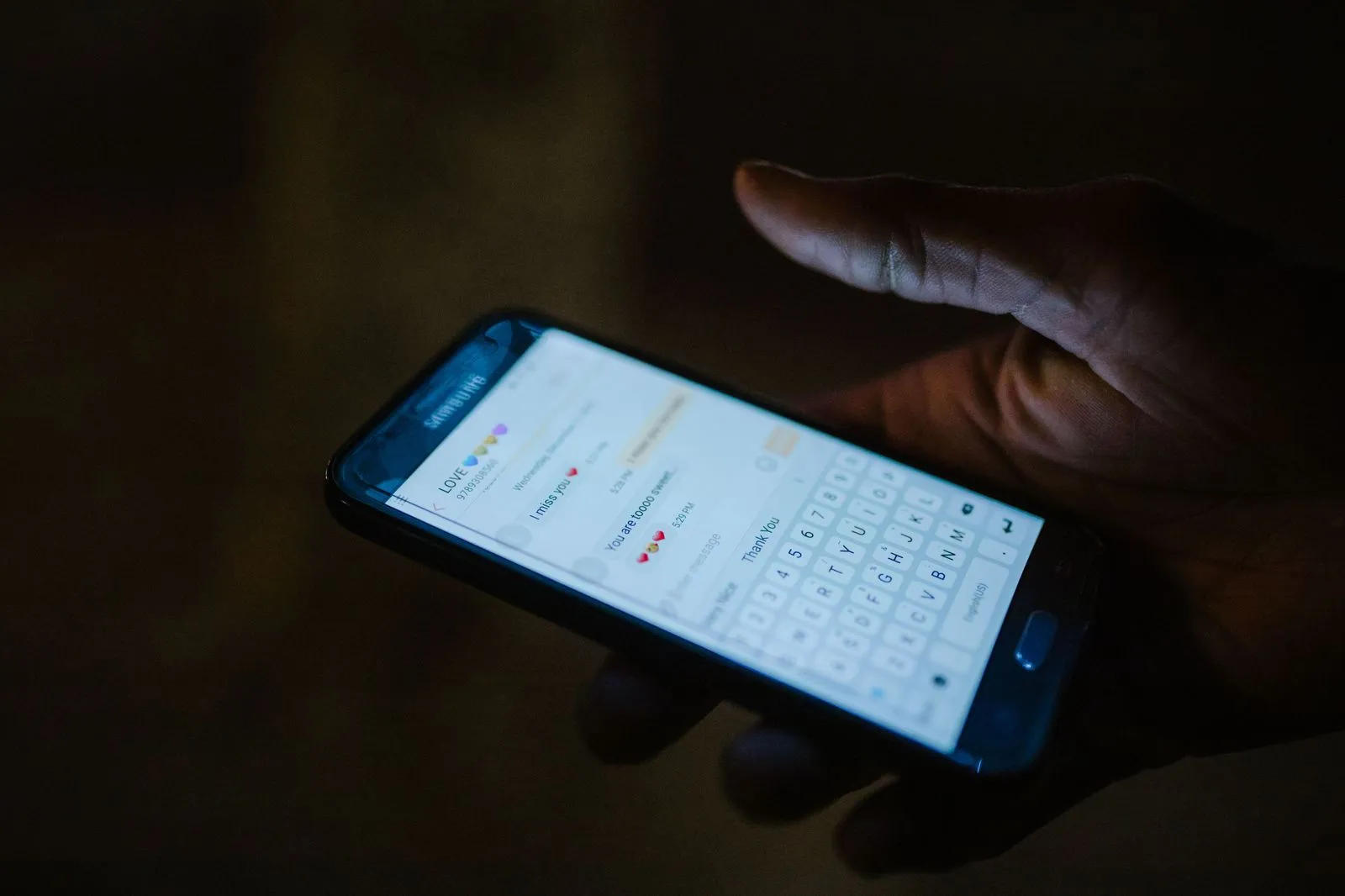
This one can follow right after you've shared your number. A text arrives with a short code, and the match asks you to send it over. The excuse varies: they sent it by mistake, or they just want to make sure you're a real person and not a bot.
The FTC describes this Google Voice code scam in detail. With your code, the scammer tries to set up a Google Voice number linked to your phone number. They can then use it to cheat other people while hiding their identity. If they also gather enough of your personal information, they could pose as you to get into your accounts or open new ones in your name. The FTC's advice is blunt: don't share a code with someone if you didn't contact them first, because that's a scam every time.
In the FTC's account, the targets are people selling things online or looking for a lost pet, and the pretext is wanting to confirm that they're real. We think the same "prove you're real" line fits a dating chat just as well. Other services, from messengers to banks, also send login codes by text. A code that lands on your phone is only ever meant for you.
Important: No real service or real match will ask you to pass on a code from your texts. Anyone who asks is after an account. End the chat and report the profile.
Scam 3: Fake "verification" links and safety checks
This version even sounds caring. Before you meet, the match suggests you both get "verified" for safety and sends a link to a site that supposedly checks, for free, that you're not a predator.
The FBI warned about exactly this scheme in 2024. Scammers meet people on dating sites and apps, quickly move the chat to an encrypted messenger, and then send the link. The site shows fake articles to look legitimate and asks for your name, phone number, email address and credit card number. Afterward, victims land on a low-quality dating site that charges costly monthly fees, and the FBI says the data can be used for identity theft or sold on the dark web.
Real verification on the big apps happens inside the app. According to Tinder's safety features page, Photo Verification means submitting a short video selfie that's compared to your profile photos using facial recognition. Verified users can choose to receive messages only from other verified profiles, and Tinder may show an alert when it detects that you're sharing contact information. A link from a match is never part of that process.
The blue check mark has limits, too. It shows that the face in the video selfie matches the profile photos. It doesn't confirm a name, age, job or intentions, and Tinder's help center says the badge is not a guarantee that the information in a profile is authentic.
Scam 4: Crypto and investment tips from a match
With this scam, the match never asks for money directly. They mention, almost in passing, that they do well trading crypto, talk about their gains and offer to show you the platform or app they use. The money you put in seems to go into an account in your own name.
Romance scams built around investments are commonly called pig butchering. The FBI describes them as schemes that convince victims to transfer large sums over time. According to an FTC analysis of 2025 reports, investment scams caused the biggest reported losses among scams that started on social media: $1.1 billion. Nearly 60% of people who reported losing money to a romance scam in 2025 said it started on a social media platform, and some of those scammers casually offered investment advice to draw people onto a fake platform.
The FTC describes how these platforms work. People open an account, see fake profits and may even withdraw a small amount, which builds trust so they invest more. Some then lose money a second time to "recovery" services that promise to trace the funds for a fee. Tinder's advice is simple: don't make investments or open accounts with someone you matched with, or through sites they recommend.
Scam 5: Emergencies, gift cards and other money requests
The classic is the sudden crisis. Your match is stuck abroad, in the hospital after an accident, or short on rent and promises to pay you back in a few days. Bumble lists these stories as typical signs of a romance scam, along with a relationship that moves very fast even though you've never met.
Bumble also points out a detail worth remembering: scammers don't just ask for money, they tell you how to pay. They want it quickly and in a way that's hard to get back, such as a check, a money transfer app or gift cards. Tinder adds that you should never send money, even in an emergency, because those transactions can be nearly impossible to reverse or trace.
Many of these requests come at the end of a long con that runs for weeks or months. How that kind of scam unfolds, and how to spot it early, is covered in our guide to romance scams. A request for a deposit or a gift card before a first date is the short version of the same idea, and in our view it ends the conversation just as clearly.
Scam 6: Blackmail after sharing photos or video
Some scams target your privacy rather than your savings. Bumble describes a common setup: a scammer posing as a romantic partner sends explicit photos and asks for some in return. Once you send them, they threaten to share the images with your friends, family or employer unless you pay, often in gift cards.
In a second variant, the scammer moves you off the app to a video call, steers it toward explicit topics and records it. A third one involves a supposed parent claiming the person you chatted with is underage, followed by a fake detective who demands money. Bumble's advice is not to pay, since there's no guarantee the scammer will delete anything, and to block and report the account. Take screenshots of the profile and the messages before you block, so you still have the evidence.
If someone is already threatening you, you're not alone and it's not your fault. Our guide on what to do about sextortion explains how to stop the contact, preserve evidence and report it.
Are dating apps legit? Bots, fake profiles and what's real
So, are dating apps legit? The large ones are real businesses with real users, reporting tools and teams that review suspicious profiles. Bumble, for example, says it has a worldwide team of moderators and uses proactive tools to detect scam profiles. None of that makes an app scam-free, because the risk comes from individual accounts, not from the app itself.
Some sites are a different story. In its first case against an online dating service, back in 2014, the FTC charged that a company had sent new users messages from fake, computer-generated profiles. Users couldn't reply without upgrading to a paid membership, and renewals were charged automatically. The company agreed to stop in a settlement. If "members" swarm you right after signup and you have to pay to answer, that's a pattern worth walking away from.
In our view, bots on mainstream apps tend to give themselves away: replies that ignore what you wrote, generic lines that could go to anyone, and a link early in the chat. Tinder lists spam and links to commercial websites among the things you can report. Profile photos may also be stolen or AI-generated, which our guide on how to tell if an image is AI-generated helps you check. Fake personas show up on social media as well, so it's worth knowing how to spot a fake Instagram account, too.
How to check a match and avoid dating app scams
A few quick checks tell you a lot before you meet. Tinder suggests a phone or video call before a first date, and both Tinder and Bumble say to be careful with anyone who keeps dodging calls. Bumble also recommends checking whether a match has completed Photo Verification.
A video call is a good test, but not proof. Real-time face-swap tools exist, and our guide on how to spot a deepfake shows what to look for. Combine the call with other checks. A reverse image search of their profile pictures, which Bumble recommends too, often shows whether the photos appear elsewhere under another name.
Ask about details that should fit the story, like their neighborhood, their job or the coffee place they mentioned. A photo holding a note with your name and today's date used to be a popular test, but it no longer proves anything, because current AI image generators can render legible text. If someone dodges every question, that's your answer.
A fresh photo with a check code: what it shows and what it doesn't
Sometimes you also want to know whether a photo was really just taken and hasn't been edited since. That's the problem we're working on with TrustCamera. The app captures photos and short videos directly, and uploads from the gallery aren't possible. Every capture gets its own code.
On a dating app, it could work like this. You ask your match to take a new photo in the TrustCamera app and send you the check code right away. Then enter it at app.trustcamera.com as soon as you get it, free and without an account. You'll see that the file is unchanged since capture, plus the capture time and the approximate location. That location is accurate to about 10 km and never shows the exact position.
The limits matter just as much. Crucially, the code doesn't show who is in the photo, whether that person runs the profile, or whether the scene was staged. It adds to a video call rather than replacing it. Think about your own privacy as well: even an approximate location tells a stranger something about you, so only share a code of your own if you're comfortable with that. The TrustCamera app for Android and iOS isn't out yet and is coming soon.
First date safety: meeting a match in person
Most dates from dating apps are perfectly ordinary. A few habits still make them safer, and Tinder lists them in its safety tips:
- Public place: Meet somewhere busy, like a coffee shop, never at your home or theirs.
- Someone knows: Tell a friend where and when you're going, and consider sharing your location.
- Your own ride: Control how you get there and back, with a ride-share app or a friend as a backup plan.
- Watch your drink: Only accept drinks straight from the bartender or server and keep them in sight.
It's also fine to end a date early. Tinder encourages it if you feel uncomfortable, and suggests asking the bartender or server for help if something feels off. Keep your phone charged, and don't share your home address or daily routine until you know the person better.

Scammed on a dating app? What to do next
Scams catch careful people too, and embarrassment won't help you now. If you've sent money, shared a code or typed in card details, act fast:
- Stop all contact: Don't pay anything more, whatever the new reason.
- Call your bank: Contact your bank or card issuer right away, report the charge and ask about a refund or a new card.
- Save the evidence: Screenshot the profile, chat, phone number and payment receipts before anything disappears.
- Report the profile: Use the report button in the app so the account gets reviewed.
- Secure your accounts: If you shared a code, lock down that account through the service's official help pages and change your passwords.
- Report the scam: File a report with the FTC at ReportFraud.ftc.gov and with the FBI's IC3.
Be wary of anyone who contacts you later offering to recover your money for a fee, since people have reported to the FTC that they lost money a second time this way. For the legal side, including whether catfishing is illegal where you live, see our guide on what to do if you get catfished.
Frequently asked questions about dating app scams
What are the most common scams on dating apps?
The common scams on dating apps follow a few scripts: moving you to WhatsApp or text, asking for a code sent to your phone, fake "verification" links, crypto and investment tips, emergencies that need money, and sextortion after sharing photos. What they have in common is timing. The scammer wants money, data or account access before you've had a chance to check who they really are.
Are dating apps legit, or are they all fake?
Established dating apps are legit businesses with real users, reporting tools and verification features. Scammers still use them, just as they use social media and messaging apps. Be more careful with unknown sites where "members" message you right after signup and you have to pay to reply. The FTC has taken action against a service that used computer-generated profiles that way.
Why does a match want my phone number so fast?
Often for harmless reasons, since many people prefer texting. Scammers, though, need your number for tricks that only work outside the app, like the code scam, and to get away from the app's safety checks. Share your number after a video call or a first date, and never forward a code that arrives on your phone afterward.
Does a blue check mark mean a profile is real?
It means the person completed photo verification: a short video selfie was compared with their profile photos. That's a useful signal that the face matches the pictures. It says nothing about their name, age, job or intentions, and Tinder itself says the badge is no guarantee. Keep using video calls, questions and the rules about money and codes.
Can you get your money back after a dating app scam?
It depends mostly on how you paid and how fast you act. Call your bank or card issuer right away and ask about a refund or chargeback. Money sent by wire, gift card or cryptocurrency is often hard or impossible to recover. Report the scam to the FTC and IC3 anyway, and never pay a service that promises to recover your money for a fee.
How do I report a scammer on a dating app?
Tinder lets you report from any profile or chat window, and Bumble has a Block & Report button on every profile. Choose the reason that fits, such as a request for money or a fake profile, and block the account. If you lost money or data, also report it at ReportFraud.ftc.gov and to the FBI's Internet Crime Complaint Center, and keep your screenshots.
Bottom line: three habits stop most dating app scams
Dating app scams can look romantic, caring or businesslike, but the core never changes. They need your money, a code or your data before you know who you're dealing with. That's why three habits protect you from most of them: keep the chat in the app, never share codes or click links from matches, and never send money to someone you haven't met.
Everything else is a bonus: a video call before the date, a reverse image search, a public place to meet. And if something goes wrong, call your bank, save the evidence, report the profile and file a report. Dating apps are still a great way to meet people, as long as you keep those habits in mind.
About the author

Co-founder & Marketing at TrustCamera
Yannick is a co-founder of TrustCamera and leads marketing and content. He holds a bachelor's and a master's degree in business and has worked in content marketing and SEO for years.